When I’m Not Painting, I Go Digging
Cabessa’s practice emphasizes that every painting possesses its own
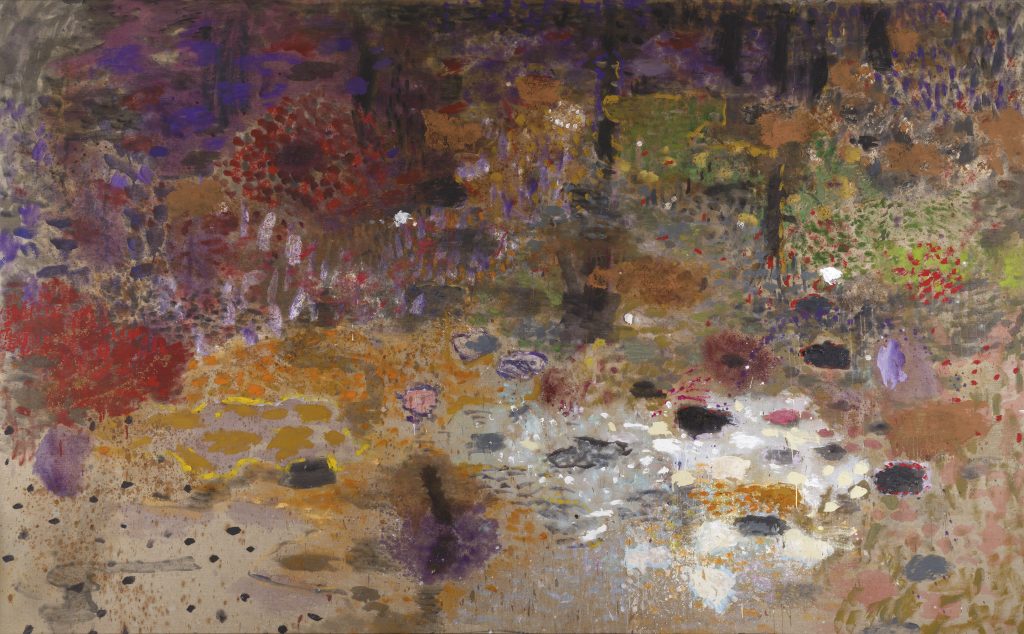
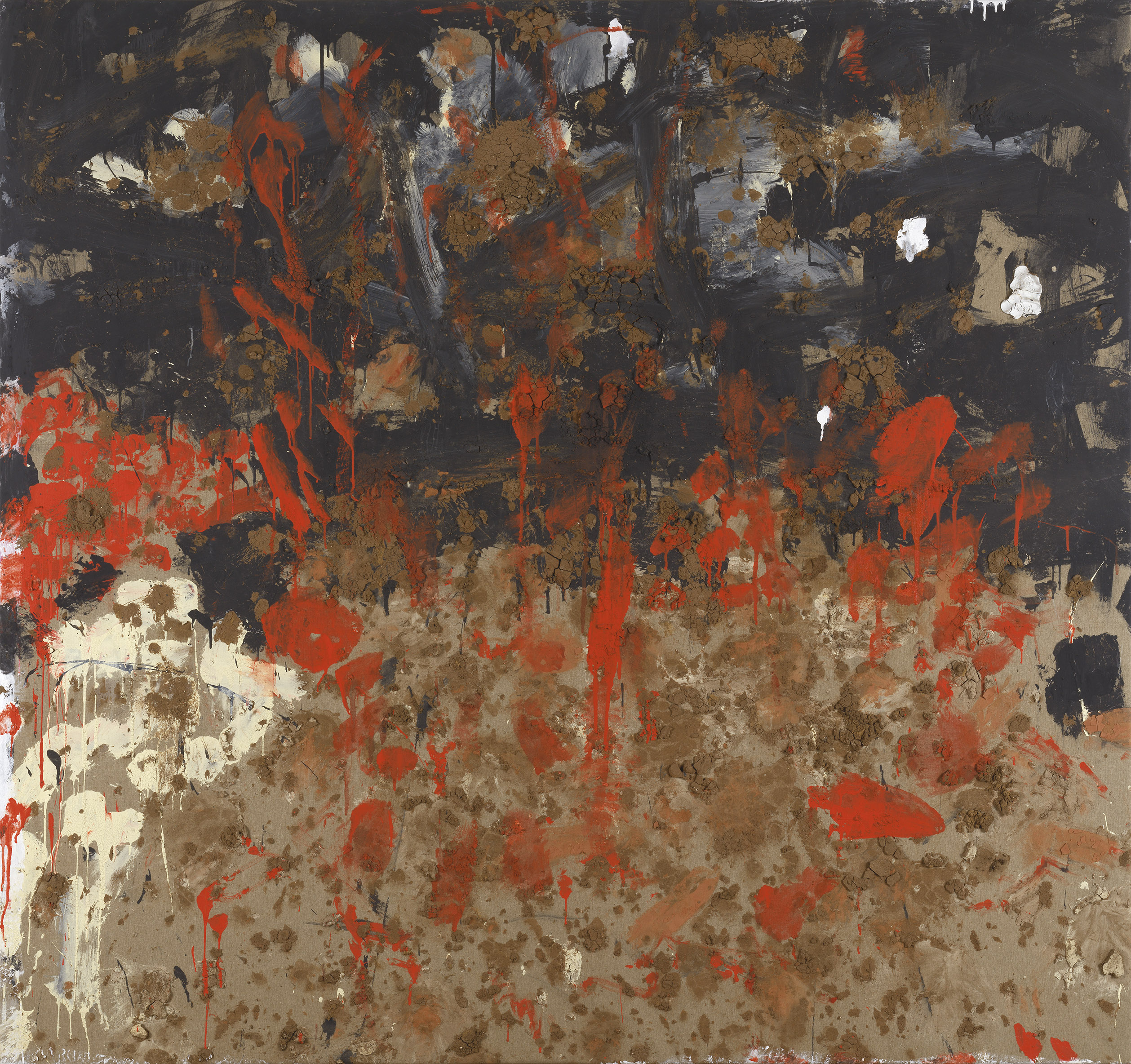
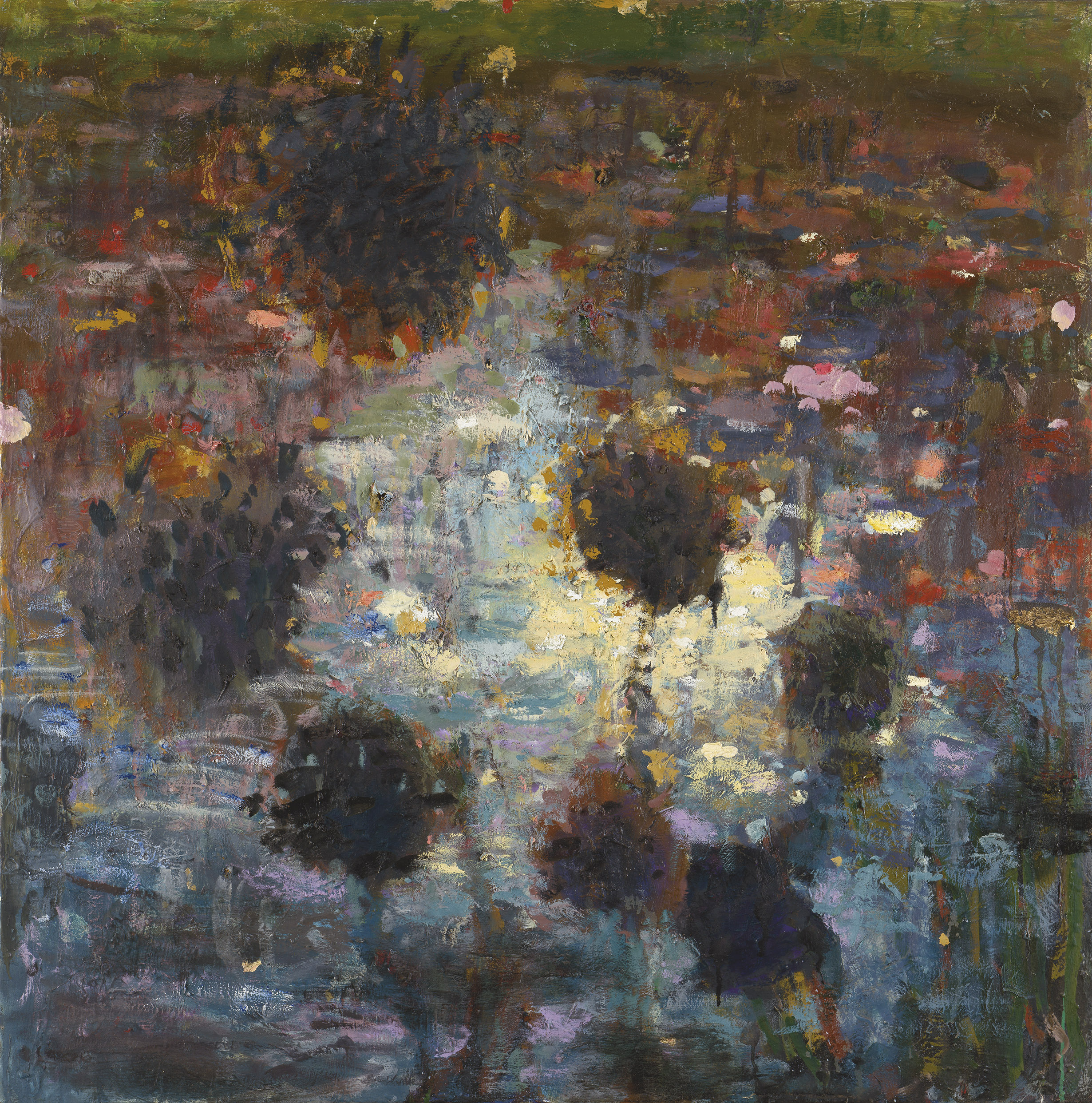
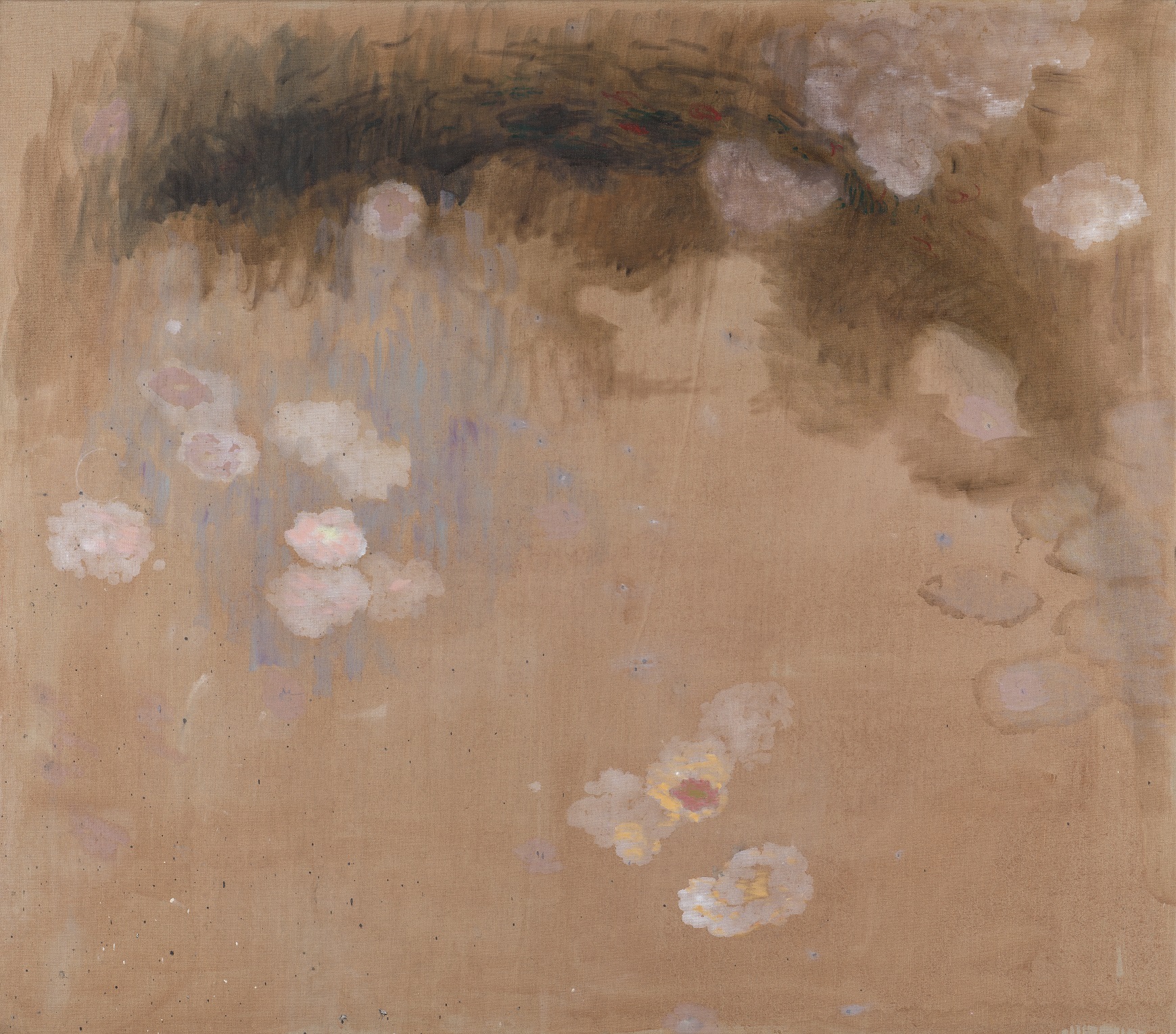
biography, history, and context. The abstract works on view in this exhibition mark
a turning point in his oeuvre. They were created amid a reality of tension, trauma,
and prolonged war.
Much like abstract painting in the mid-twentieth century—
which many regarded as a response to the crisis of representation brought about by
World War II—Cabessa’s paintings refuse to offer a concrete image. Instead, they
constitute a crucial response to a crisis that began even before October 7, 2023 and
intensified in its aftermath.
Cabessa’s paintings express a desire to move away from representation and
closer to the earth—to become Action Painting, to be in the world without mediation,
to exist within painting itself. His practice unfolds within a physical landscape that
encompasses both his studio and the adjacent grove. There, he has excavated small
pools of water and cultivated vegetation that has gradually evolved into a garden.
The movement from canvas to earth and back again embodies a transition from a
space of being to one of self-reflective consciousness. Cabessa conceives of painting
as an event that generates an experience in real time—a form of metaphysical
excavation into what lies beneath the surface, within the geological and archaeological
strata of reality.
Cabessa’s paintings possess a hypnotic quality, born of the primal interplay
of stain against stain, color against color, line against line. At times, his hands
replace the brush, intervening after paint or mud has already landed onto the
canvas. Layer upon layer accumulates like moss in a Japanese garden, functioning
simultaneously as concealment and transparency.
The paintings often preserve traces
of earlier states—organic residues, creases, and cracks formed by dried brushstrokes
that are subsequently reworked. They also reveal the influence of earlier painters,
Claude Monet among them, reflecting Cabessa’s desire to situate his practice within
a broader painterly tradition.
Created through fluid, aqueous gestures within an earthen space, the paintings
seek to break through the surface with translucent and opaque passages of paint.
They reveal rhythmic brushstrokes that search for a point of emergence, one that
requires no justification or intellectual framing but manifests directly in the act
of painting itself, toward which the artist directs his body.
Cabessa’s paintings
may be understood as a kind of “compost,” inviting viewers to follow the image’s
decomposition, transformation, and the traces it leaves behind. They forge an
intimate relationship between world, body, and earth, creating an experience that
demands physical presence, time, and movement.